

26 Feb Does a Compass Lie?


A compass does not lie, but it is susceptible to influence. A magnetic compass is almost like a living entity; it senses everything in its surroundings—iron, electricity, even the Sun.
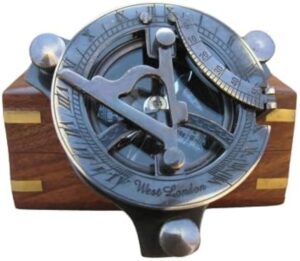
History is full of instances where the compass was wrongly accused of deception. When iron-hulled ships became prevalent in the 19th century, captains believed they were maintaining a true course, only to find their vessels drifting unexpectedly. The problem lay not with the compass, but with the ship itself. The iron hull distorted the compass’s magnetic field. This phenomenon became so widespread that it gave birth to the concept of “compass deviation,” a term still fundamental to navigation today. It was recognized that every vessel possesses its own unique magnetic character, leading to the practice of calibrating compasses specifically for the individual ship.
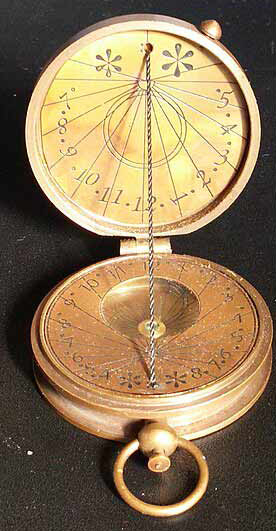
Another notable event occurred in 1889 off the coast of Newfoundland in the North Atlantic. The steam-powered passenger ship SS Oregon was sailing through dense fog with near-zero visibility. Sensing a change in the sound of the waves, the crew warned the captain that they were approaching land. However, Captain Charles H. Livingston refused to alter the course. His reasoning was simple: the compass still pointed toward the open sea. Hours later, when the fog lifted, it was revealed that the ship was indeed dozens of miles away from the coast. The crew’s senses had faltered; the compass had been silently telling the truth. In maritime reports of the era, this event is cited as a classic “conflict between human perception and magnetic reference.”
There are, of course, moments when the compass truly struggles. Powerful magnetic storms, particularly at high latitudes, can cause the needle to become erratic. While rare, this is a reality. The compass does not claim absolute perfection; it is bound to nature. Yet, that is precisely what makes it valuable: it is mechanical, simple, and honest.
This brings us to the inevitable question: In the age of GPS, why do we still keep a compass on board?
On modern yachts, screens glow with data. Chartplotters, AIS, radar, and satellite links provide simultaneous information on position, speed, and heading. But experienced captains know that electronic systems share a common vulnerability: they are dependent on electricity and software. Batteries can fail, systems can freeze, and antennas can malfunction. In the maritime world, the “rare occurrence” is eventually a certainty.

The compass, however, remains independent. It requires no power, no signal, and no updates. Its sole function is to reflect the Earth’s magnetic field. Therefore, in modern navigation, the compass is not the primary tool, but the ultimate layer of safety. Even when electronics are fully operational, many captains keep a weather eye on the compass—because it remains the quickest way to verify if the data on the screen is logical.

In truth, the compass and GPS are not rivals; they are complementary. GPS provides the location, while the compass allows you to “feel” the direction. Ancient mariners maintained their course by the stars; modern sailors look to a screen. Technology has advanced, but uncertainty has never truly vanished.
The compass is more than just a tool; it is the silent memory of maritime culture. It speaks when the electronics go silent; it guides when the sea confuses. Perhaps that is why, even on the most sophisticated modern yachts, it still holds its place of honor.
Can BELİKIRIK – Spare Parts Sales Consultant